Posted in Advertorial Feature

Do You Struggle with Vertigo or Dizziness? Gateway Upper Cervical Institute in Pacific Can Help

With the goal of helping people in Pacific and beyond get the proper upper cervical care, Gateway Upper Cervical Institute led by Dr. Max Orris focuses on providing care in several practice areas, including treating vertigo and dizziness.

While many people may be familiar with the sensation of vertigo or dizziness, it’s a condition that can cause major disruptions to daily life since it can impact a person’s ability to drive, and how they see and sense the world around them. Although the experience of vertigo and dizziness may be used interchangeably, they typically have different causes and varying symptoms. 

A person with vertigo often feels like the room is spinning and this condition has different causes, terminology, and diagnoses associated with it, while dizziness tends to be more of a balance issue and is best described as feeling as if you’re on a boat. Vertigo can also impact a person’s vision causing blurry sight or seeing double. Other visual impairments associated with vertigo can include feeling like objects are bouncing, having sensitivity to light, having problems with spatial orientation, and difficulty focusing on an object. 
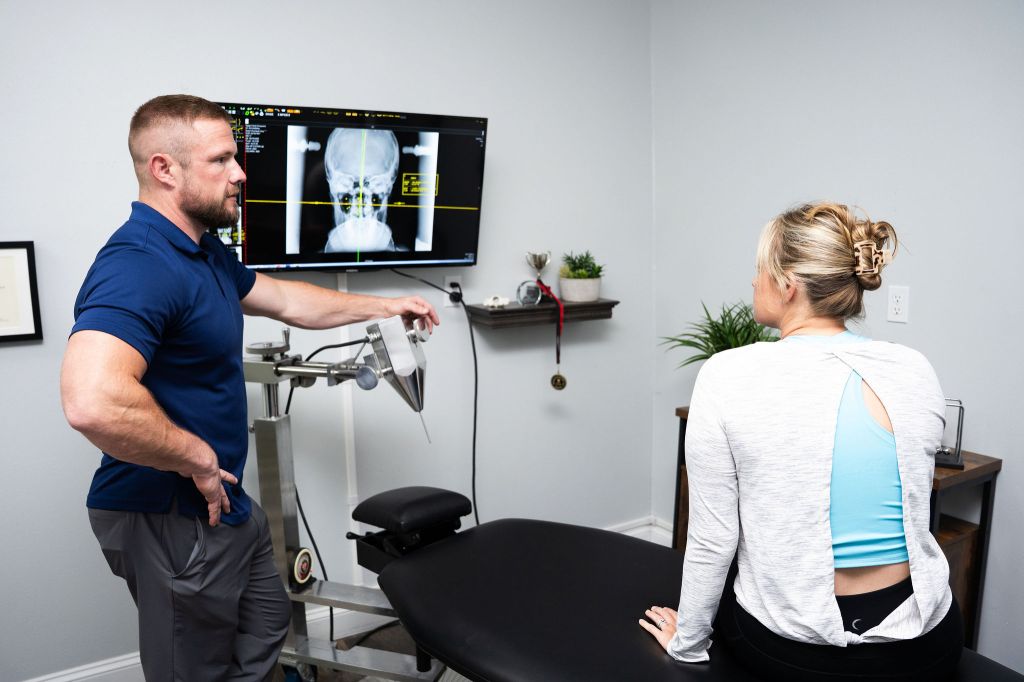
While anyone can have vertigo or dizziness, Dr. Max shares that women experience the issue more than men. Photo credit: Gateway Upper Cervical Institute.

Since vertigo can affect vision and dizziness impacts balance, a common focus area for both health practitioners and people experiencing vertigo and dizziness is to first rule out that the problem isn’t being caused by an inner ear or vision issue. Since there are three main areas of the body that create a vertigo or dizziness response, the ears and eyes are often the areas people tend to have checked out as possible causes first. 

“People find our office most often after they’ve seen their primary doctor, they’ve been to physical therapy, they’ve been to an ENT, or have tried different treatments without results or they’ve not gotten answers,” Dr. Max explains.

Because about 70% of the input into the vestibular nuclei, which is the area of the brain that integrates from the eyes, ears and neck, comes from the muscles in your upper neck, upper cervical care practitioners can often get results where traditional medicine hasn’t produced an outcome. Since these muscles have such a high sensory input into the brain, when there’s a misalignment in the upper neck muscles, the body can receive incorrect information causing a person to experience a sensation like they’re on a boat or the room is spinning.

Common types of vertigo

While more traditional medical treatments from primary doctors and ENTs along with certain therapeutic methods performed by PTs have their place when treating vertigo or dizziness, often they’re meant for specific conditions, and vertigo can take on a few different forms. 

For instance, Benign Paroxysmal Positional Vertigo (BPPV) is a positional form of vertigo meaning that a person will feel a sudden spinning sensation with certain head movements, such as after rolling over in bed. 

Another type of vertigo is caused by a Vestibular Migraine which is dizziness or motion sensitivity that can be accompanied by a headache, but not always. Sometimes dizziness can stem from experiencing head or neck trauma, such as after a concussion, and in the case of Cervicogenic Dizziness, a person may experience an unsteady, floating, or off-balance sensation that is linked to neck tension or posture.

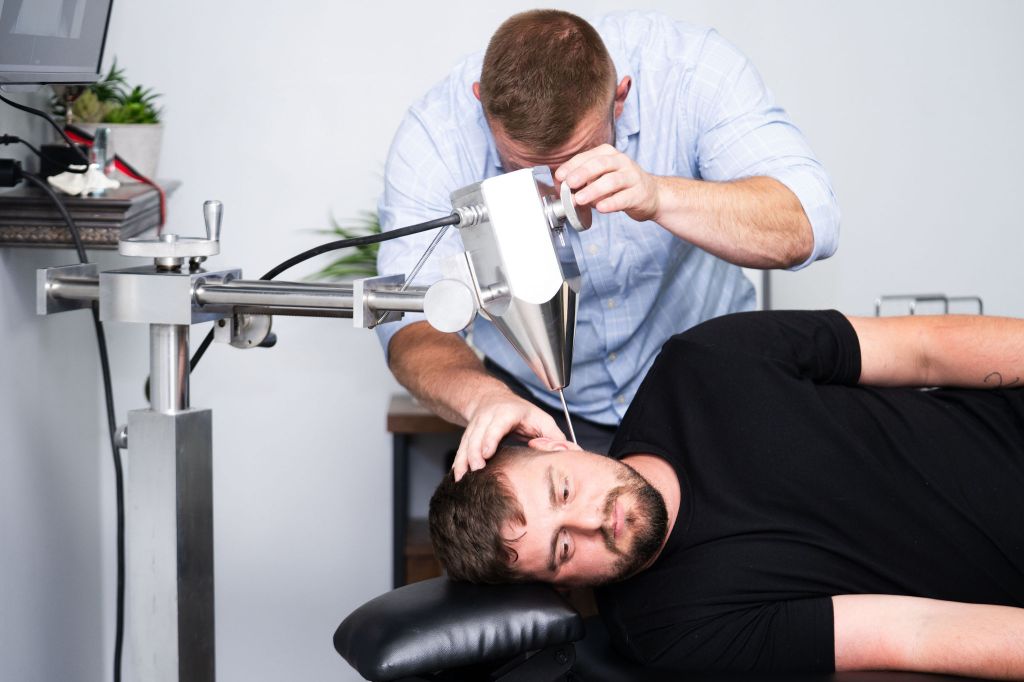
Dr. Max shares that when clients come to the Institute for treatment of dizziness and vertigo, they’ll often see results within the first few visits since he utilizes various tools and equipment not used elsewhere in the region, like a specialized chiropractic instrument called a stylus that uses high-frequency sound wave technology. 
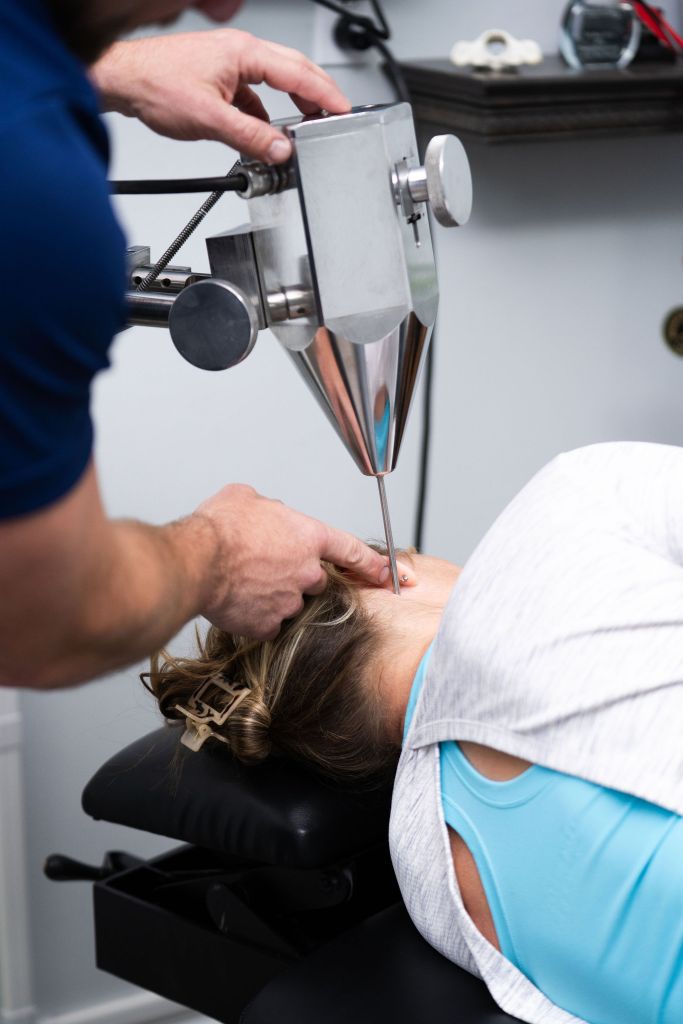
By utilizing sound wave technology through the stylus tool pictured here, Dr. Max can achieve a high success rate for patients struggling with vertigo and dizziness. Photo credit: Gateway Upper Cervical Institute.

“We have around an 85% success rate,” he shares. 

Another the reason for the high success rate is due to a screening tool that dials into what is causing the symptoms. There’s a short quiz available on the Institute’s website that potential patients can take prior to visiting the office. After filling it out, the office will reach out and set up a time to be seen. Or, if the in-office screening results indicate that a different form of treatment is better for an individual’s conditions, the Institute has a number of referral partners that they can refer a patient to, and those referral partners also have high success rates treating vertigo and dizziness. 

If you or someone you know experiences vertigo or dizziness, take Gateway Upper Cervical Institute’s online quiz. Or contact the business by phone at 636-271-2960, or visit Gateway Upper Cervical Institute online to find out more. Gateway Upper Cervical Institute is located at 409 West Osage in Pacific.
Posted in Advertorial Feature

Gateway Upper Cervical Institute in Pacific Offers Care That is Only Available at Two Facilities in Missouri

Although it may be common for people to experience recurring migraines, tinnitus, vertigo or other issues, people don’t have to struggle with these symptoms. While some people can spend years seeking traditional medical help to no avail, others may learn to live with these conditions that can negatively impact daily life.

What people in our area may not know is that a chiropractor in Pacific has an advanced approach that’s helping his patients get relief from ailments like migraines, vertigo, tinnitus, and several other health issues that don’t often respond to traditional medical treatments or chiropractic methods. 

Gateway Upper Cervical Institute – a division of Orris Family Chiropractic led by Dr. Max Orris – uses specific techniques that utilize sound wave technology. This form of advanced orthogonal upper cervical care doesn’t rely on traditional chiropractic methods that involve twisting or popping to perform an adjustment. 

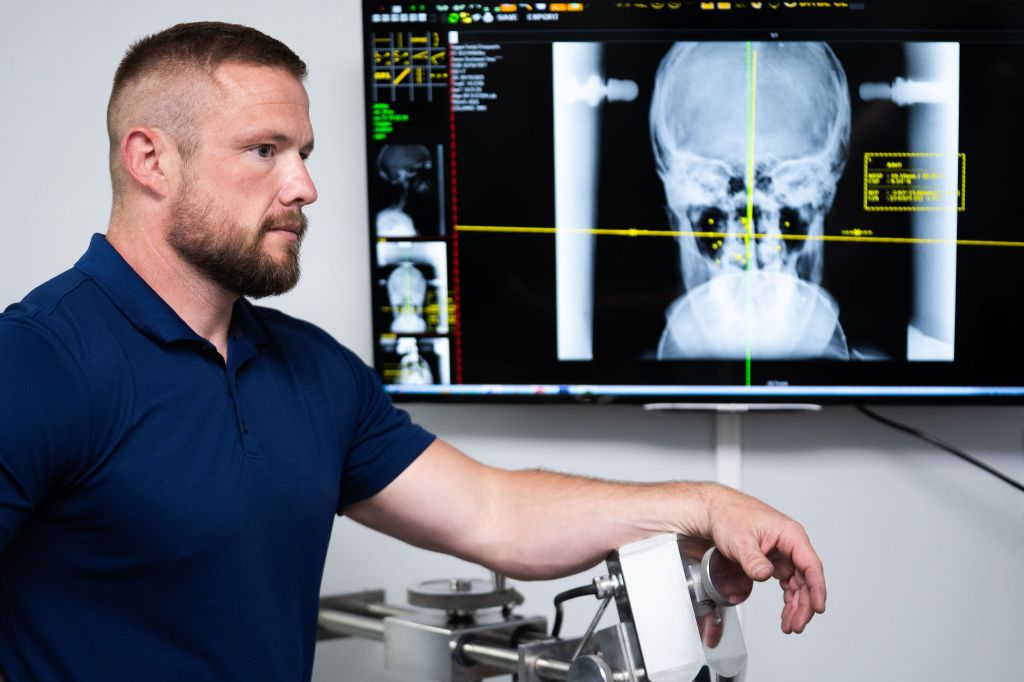
Because orthogonal means “a perfect square” this form of treatment realigns the neck bone so that it sits in its proper place. The top bone in the neck is known as the atlas and when its optimally aligned, it should form a square between the head and the rest of the body when viewed on an X-ray. 

“Our goal is to get everything as close to square as possible. We’re literally getting your head on straight,” he explains of the treatment.

The atlas should form a square between the head and the rest of the body when viewed on an X-ray.

This form of care is so advanced that Gateway Upper Cervical Institute is just one of two offices in the state that’s capable of delivering this type of treatment to its patients. Since the only other provider of this type of advanced orthogonal care in Missouri is located near Joplin, Dr. Max sees patients seeking care who reside in the Franklin County and St. Louis metro areas, as well as people living within a two to three hour drive of the office.

Dr. Max launched Gateway Upper Cervical Institute in 2025, because being able to provide this level of care and specific technique is something he’s wanted to do since graduating from Logan University just over a decade ago.  

When he was finishing up his degree program Dr. Max visited several chiropractic offices along the Gulf Coast, shadowing Doctors of Chiropractic in order to complete his doctoral program. During that time, Dr. Max shadowed and learned from a chiropractor in St. Petersburg, Florida who developed the advanced orthogonal technique that Dr. Max currently uses at Gateway Upper Cervical Institute. Receiving an advanced orthogonal adjustment in St. Petersburg all those years ago is something that has left a lasting impression.

The reason why advanced orthogonal is different than other upper cervical care.

“To this day that was the most profound adjustment I’ve ever had,” he recalls. While Dr. Max wasn’t having any symptoms at the time that would require advanced orthogonal care, he says that he left feeling “really good” and noticing how different that adjustment felt for him. 

Possible candidates for advanced orthogonal care

Although the symptoms of migraines, vertigo, tinnitus or even TMJ may differ, the root cause of these issues can stem from the atlas becoming misaligned. Whatever the initial cause, relief can be possible through advanced orthogonal care. 

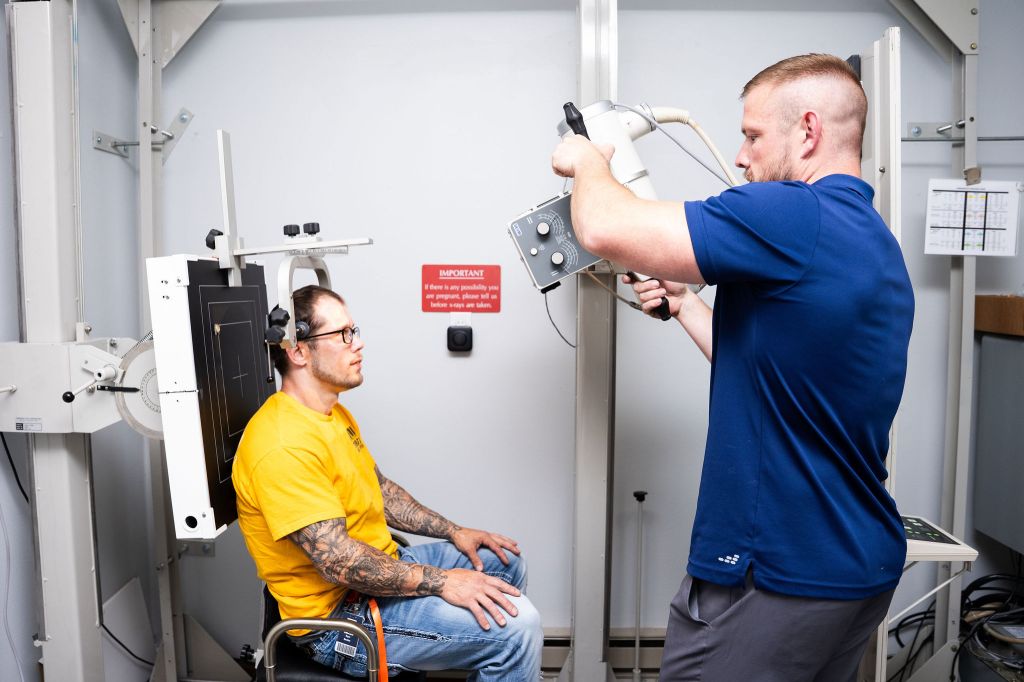
When a patient comes in for care, Dr. Max utilizes a series of tests and equipment, including a seated X-ray machine and a specialized chiropractic instrument, called a stylus, which delivers a precise, high-frequency sound wave. After a patient has gone through the X-ray process, Dr. Max reviews the results with them, and pinpoints the stylus exactly where the misalignment occurs for each patient, per their individual X-ray results. The sound wave technology delivers quiet, painless treatment for each person.

Dr. Max utilizes a series of tests and equipment to treat patients seeking advanced orthogonal care.

Patient results

Many patients who see Dr. Max for advanced orthogonal care have seen improvement in their conditions, often in a short amount of time. Tinnitus can be a common issue for veterans, and over time, people learn to live with the condition and can get used to the persistent ringing in the ears without realizing the impact it has on their hearing. One veteran with tinnitus who was seen by Dr. Max reported an improvement in his hearing ability after one treatment. 

Vertigo impacts a person’s life since the dizziness condition creates a false sensation that the room is spinning, even when a person with vertigo is sitting still. Its impacts on balance and movement means that a person experiencing vertigo may have issues with fulfilling day to day activities, such as driving. Patients who receive treatment for this can often see improvements that allow them to get behind the wheel again.

The stylus uses sound wave technology to deliver precise and pain-free treatment.

Because getting optimal patient results is important at Gateway Upper Cervical Institute, Dr. Max also performs a series of tests designed to measure results and to better inform future adjustments.  

If you believe you or someone you know may benefit from advanced orthogonal care performed by Dr. Max, reach out by phone at 636-271-2960, or visit Gateway Upper Cervical Institute on the web. Gateway Upper Cervical Institute is located at 409 West Osage, in Pacific, inside Orris Family Chiropractic.