With the goal of helping people in Pacific and beyond get the proper upper cervical care, Gateway Upper Cervical Institute led by Dr. Max Orris focuses on providing care in several practice areas, including treating vertigo and dizziness.
While many people may be familiar with the sensation of vertigo or dizziness, it’s a condition that can cause major disruptions to daily life since it can impact a person’s ability to drive, and how they see and sense the world around them. Although the experience of vertigo and dizziness may be used interchangeably, they typically have different causes and varying symptoms.
A person with vertigo often feels like the room is spinning and this condition has different causes, terminology, and diagnoses associated with it, while dizziness tends to be more of a balance issue and is best described as feeling as if you’re on a boat. Vertigo can also impact a person’s vision causing blurry sight or seeing double. Other visual impairments associated with vertigo can include feeling like objects are bouncing, having sensitivity to light, having problems with spatial orientation, and difficulty focusing on an object.
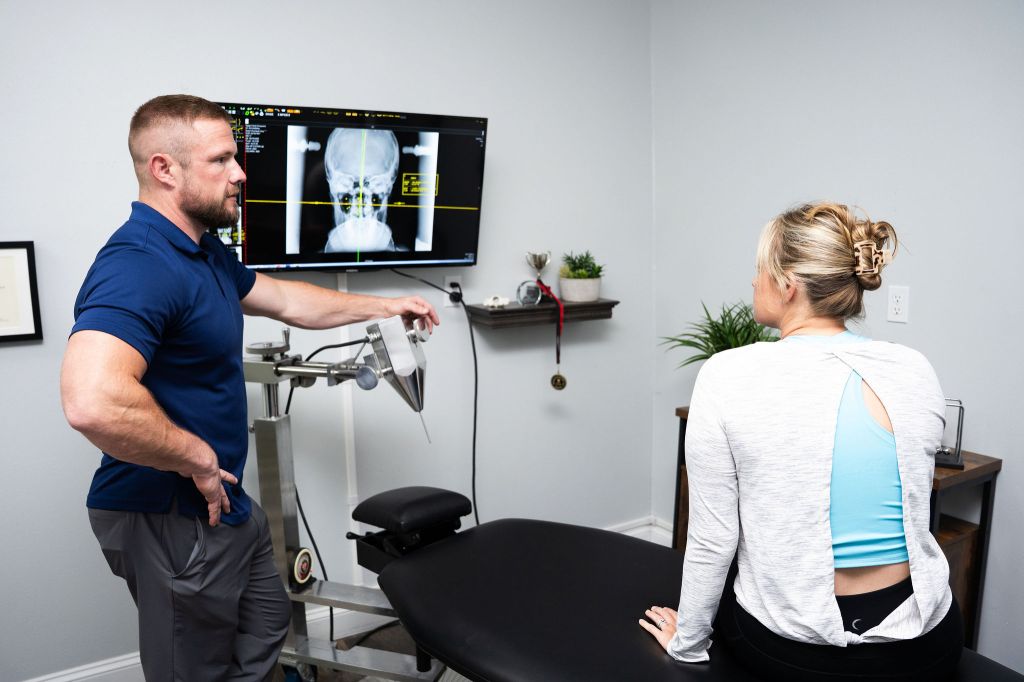
Since vertigo can affect vision and dizziness impacts balance, a common focus area for both health practitioners and people experiencing vertigo and dizziness is to first rule out that the problem isn’t being caused by an inner ear or vision issue. Since there are three main areas of the body that create a vertigo or dizziness response, the ears and eyes are often the areas people tend to have checked out as possible causes first.
“People find our office most often after they’ve seen their primary doctor, they’ve been to physical therapy, they’ve been to an ENT, or have tried different treatments without results or they’ve not gotten answers,” Dr. Max explains.
Because about 70% of the input into the vestibular nuclei, which is the area of the brain that integrates from the eyes, ears and neck, comes from the muscles in your upper neck, upper cervical care practitioners can often get results where traditional medicine hasn’t produced an outcome. Since these muscles have such a high sensory input into the brain, when there’s a misalignment in the upper neck muscles, the body can receive incorrect information causing a person to experience a sensation like they’re on a boat or the room is spinning.
Common types of vertigo
While more traditional medical treatments from primary doctors and ENTs along with certain therapeutic methods performed by PTs have their place when treating vertigo or dizziness, often they’re meant for specific conditions, and vertigo can take on a few different forms.
For instance, Benign Paroxysmal Positional Vertigo (BPPV) is a positional form of vertigo meaning that a person will feel a sudden spinning sensation with certain head movements, such as after rolling over in bed.
Another type of vertigo is caused by a Vestibular Migraine which is dizziness or motion sensitivity that can be accompanied by a headache, but not always. Sometimes dizziness can stem from experiencing head or neck trauma, such as after a concussion, and in the case of Cervicogenic Dizziness, a person may experience an unsteady, floating, or off-balance sensation that is linked to neck tension or posture.
Dr. Max shares that when clients come to the Institute for treatment of dizziness and vertigo, they’ll often see results within the first few visits since he utilizes various tools and equipment not used elsewhere in the region, like a specialized chiropractic instrument called a stylus that uses high-frequency sound wave technology.
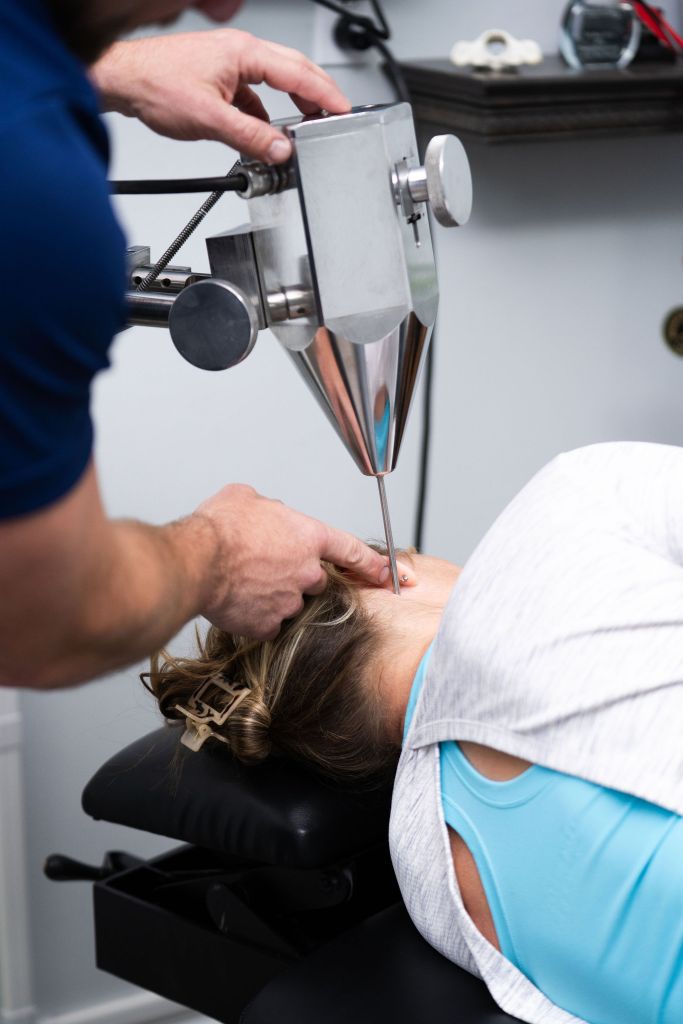
“We have around an 85% success rate,” he shares.
Another the reason for the high success rate is due to a screening tool that dials into what is causing the symptoms. There’s a short quiz available on the Institute’s website that potential patients can take prior to visiting the office. After filling it out, the office will reach out and set up a time to be seen. Or, if the in-office screening results indicate that a different form of treatment is better for an individual’s conditions, the Institute has a number of referral partners that they can refer a patient to, and those referral partners also have high success rates treating vertigo and dizziness.
If you or someone you know experiences vertigo or dizziness, take Gateway Upper Cervical Institute’s online quiz. Or contact the business by phone at 636-271-2960, or visit Gateway Upper Cervical Institute online to find out more. Gateway Upper Cervical Institute is located at 409 West Osage in Pacific.
 Small Town Socialite